 Proma Medical Prioritizes Functionality and User Experience
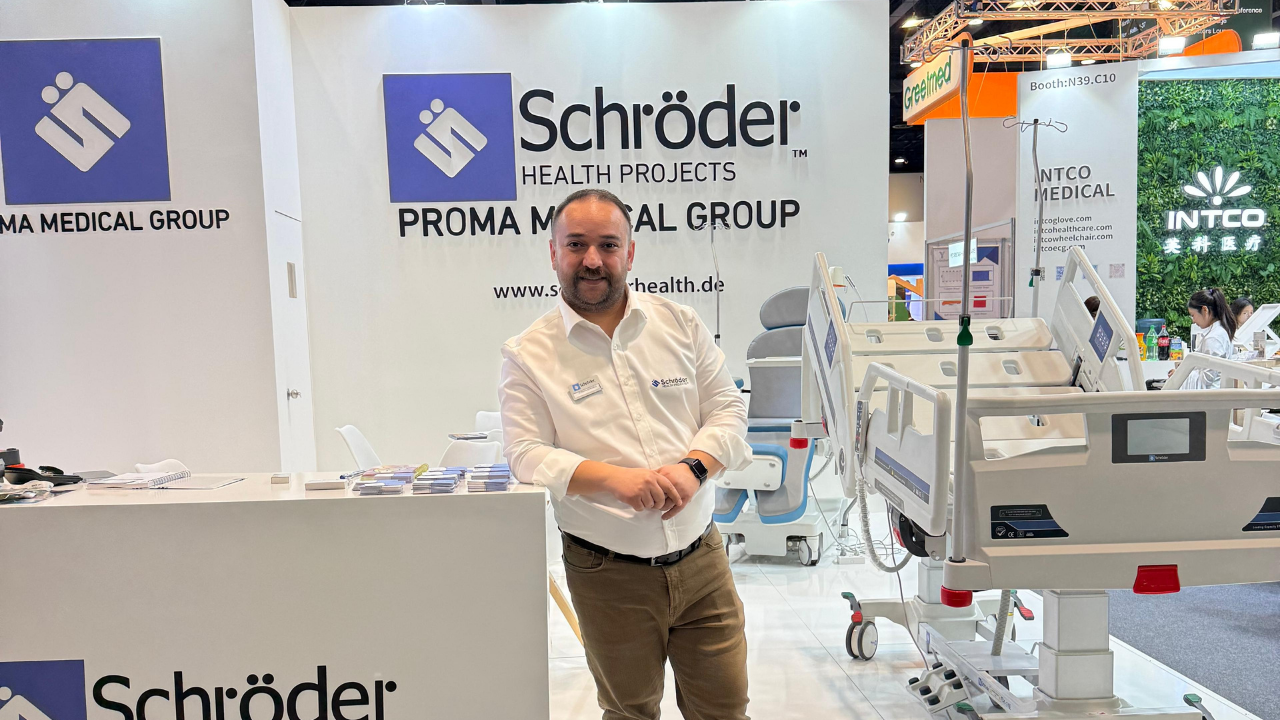
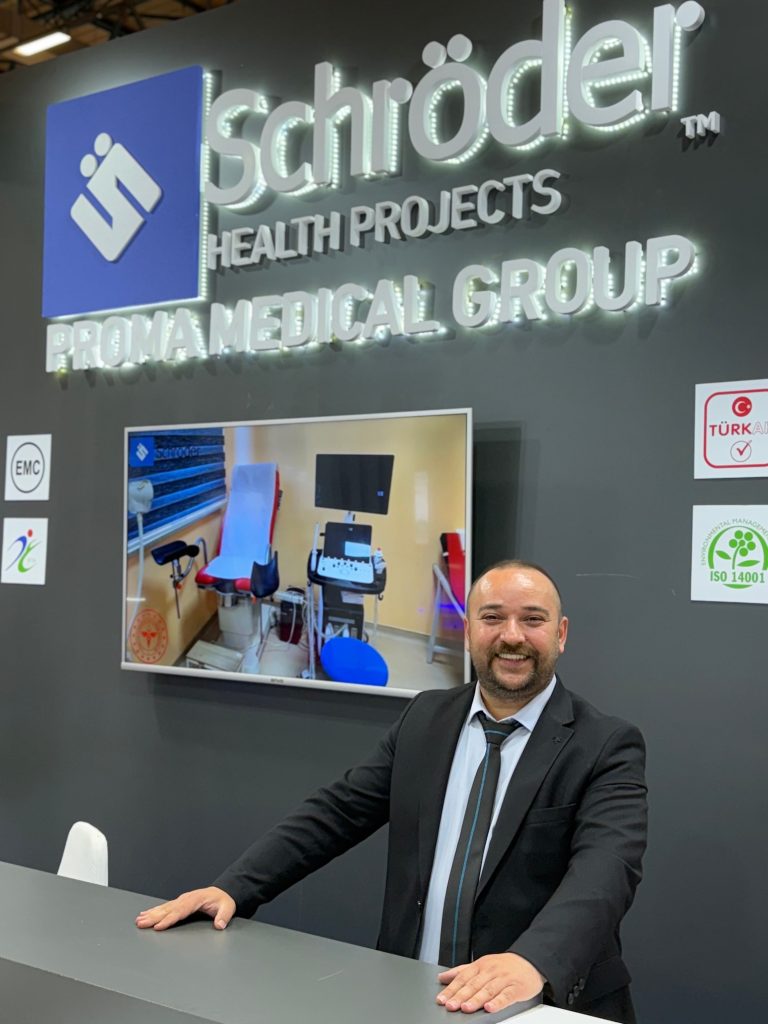
Proma Medical (Schröder Health Projects), which develops products for critical areas such as intensive care units, delivery rooms, and operating theaters, can deliver within 7–10 business days within Turkey and within 2 weeks to its partners in Europe. Export Coordinator Furkan Gürünlü stated that the company considers functionality and user experience as fundamental elements, and shared information about the company’s operations.
Proma Medical (Schröder Health Projects) exports to over 100 countries. What have been the biggest challenges in your international growth process, and what advantages does Turkey-based production provide you?
Our international growth process involves various challenges due to differing regulations and logistical conditions in each country. However, we turn these obstacles into advantages through our Turkey-based production capabilities. In addition to certifications such as CE, ISO, and FDA, we adapt our products to meet local requirements and coordinate our R&D and technical documentation teams efficiently. We also localize catalogs and technical documents according to the purchasing habits of each market.
Our integrated facility in Gaziantep, with its modular infrastructure, enables fast and flexible production. More than 85% of our components are locally sourced. Thanks to Turkey’s strategic location, we can deliver quickly to Europe, the Middle East, and Africa, providing a significant advantage in urgent projects.
Proma Medical (Schröder Health Projects)’s product portfolio is extensive, ranging from electronic beds and stretchers to maternity and gynecology beds, as well as medical chairs. How are your R&D and product development processes organized to handle such a diverse range of products? Do you provide modular and adaptable designs, or solutions specifically tailored to the unique needs of different clinical environments?
Schröder Health’s R&D approach is designed to be modular and responsive to clinical needs. Specialized teams develop customized solutions for each product group while maintaining high quality standards. Thanks to modular design, products can be adapted to different clinical requirements, maintenance becomes easier, and they can meet the needs of export markets. On-site observations and user feedback play a key role in the R&D process. The system is integrated with production, speeding up the transition from prototype to mass production, and all technical information is shared in the field through the ERP system. This flexible and well-organized approach supports healthcare in Turkey and strengthens our competitiveness in global markets.
Which quality management systems do you have, particularly for products used in critical areas such as intensive care units and maternity wards? (For example, ISO 13485, CE, local content ratio, etc.) Additionally, how do these certifications impact your daily production?”
As Schröder Health, we adopt Quality Management Systems as a fundamental element of our production culture while developing products for critical areas such as intensive care, delivery rooms, and operating rooms. We enhance our reliability in both national and international markets with certifications like ISO 13485, ISO 9001, ISO 14001, ISO 14971, CE, and domestic contribution certificates (or “local content certificates”). Our production processes are based on risk analysis, traceability, environmental sensitivity, and user feedback. Every product is manufactured according to defined processes and documented with technical files. The requirements of CE and ISO are considered right from the design stage. These systems directly support our production speed, customer satisfaction, and export success.
Which regions will you prioritize for the next 3-5 years?
Our international growth strategy for the next 3–5 years focuses on both deepening our presence in existing markets and expanding into new, high-potential regions. Within this framework, we can summarize the regions we prioritize under three main headings: Europe, Russia, and North and South America. In Europe, thanks to our strong existing distributor network and high technical competencies, we will focus more on public tenders and private hospital projects, especially in countries like Italy, Portugal, Romania, and Poland.
In medical furniture manufacturing in Turkey, the criteria of “local production, high quality, and fast delivery” have become extremely important. Could you provide information about your local content ratio, production capacity, and supply chain?
This aligns perfectly with our production approach. As Schröder Health, we have a strong position in all three areas. The local content of our products is analyzed by our R&D and design teams and exceeds 85%. Critical components such as metal processing, electrostatic painting, injection-molded plastic parts, and textiles are produced in collaboration with our partners in Turkey. Our integrated facility has a monthly production capacity of over 3,000 units. Thanks to the advantage of local production, we have minimized delivery times: domestic shipments take an average of 7–10 business days, while deliveries to our partners in Europe are made within approximately 2 weeks.
You have a design-focused approach — how does this differentiate you from your competitors? How does user feedback influence your processes?
At Schröder Health, we view design not merely as an aesthetic element but as a core component of functionality and user experience. Our design-focused approach is one of our strongest differentiators, ensuring that our products stand out not only visually but also in terms of clinical workflow compatibility, ergonomics, and ease of maintenance. When developing our products, we consider both the operational needs of healthcare professionals and the comfort expectations of patients. Modularity is a key principle in our design process, allowing different accessories, control systems, or surface finishes to be integrated onto the same product base. Feedback from clinical staff, technical service teams, and end-user patients is an integral part of our product development cycle. After each product launch, a feedback collection process is initiated, and the data is analyzed by our R&D and design teams to guide subsequent production series. We have always valued user feedback, which is why our designs are continuously updated. Being recognized as a company that releases new designs and models every year is extremely important to us. In summary, Schröder Health’s design approach is user-centered, flexible, and field-sensitive. This ensures that our products make a difference not only technically but also experientially. We approach design not as an engineering discipline, but as a language of solutions, which is one of the key factors that sets us apart from our competitors.
Lastly, the healthcare sector is evolving rapidly, with factors such as an aging population, home care solutions, and post-pandemic transformations taking center stage. At Schröder, which innovative products, services, or business models are you planning to focus on in the coming years? Do you have specific plans in areas such as “home care,” “care equipment,” or “integrated solution systems”?
As Schröder Health, we are driving the transformation of the healthcare sector by focusing on home care solutions, ergonomic care equipment, and integrated solution systems. We bring hospital-level comfort to patients’ homes with mobile patient beds and our CARE series beds, while reducing nurses’ workload through ergonomically designed and AI-supported equipment. At the same time, we present medical furniture, logistics, and installation services under a single roof for both public and private institutions. With digital tracking systems, we monitor product lifecycles and continuously innovate in services and business models, combining our domestic manufacturing strengths with global healthcare needs.